GHS07 — the exclamation mark pictogram
The catch-all for significant but lower-severity health hazards: harmful if swallowed/inhaled/on skin (acute category 4), skin and eye irritation, skin allergy, airway irritation, or drowsiness and dizziness.
The official artwork, free
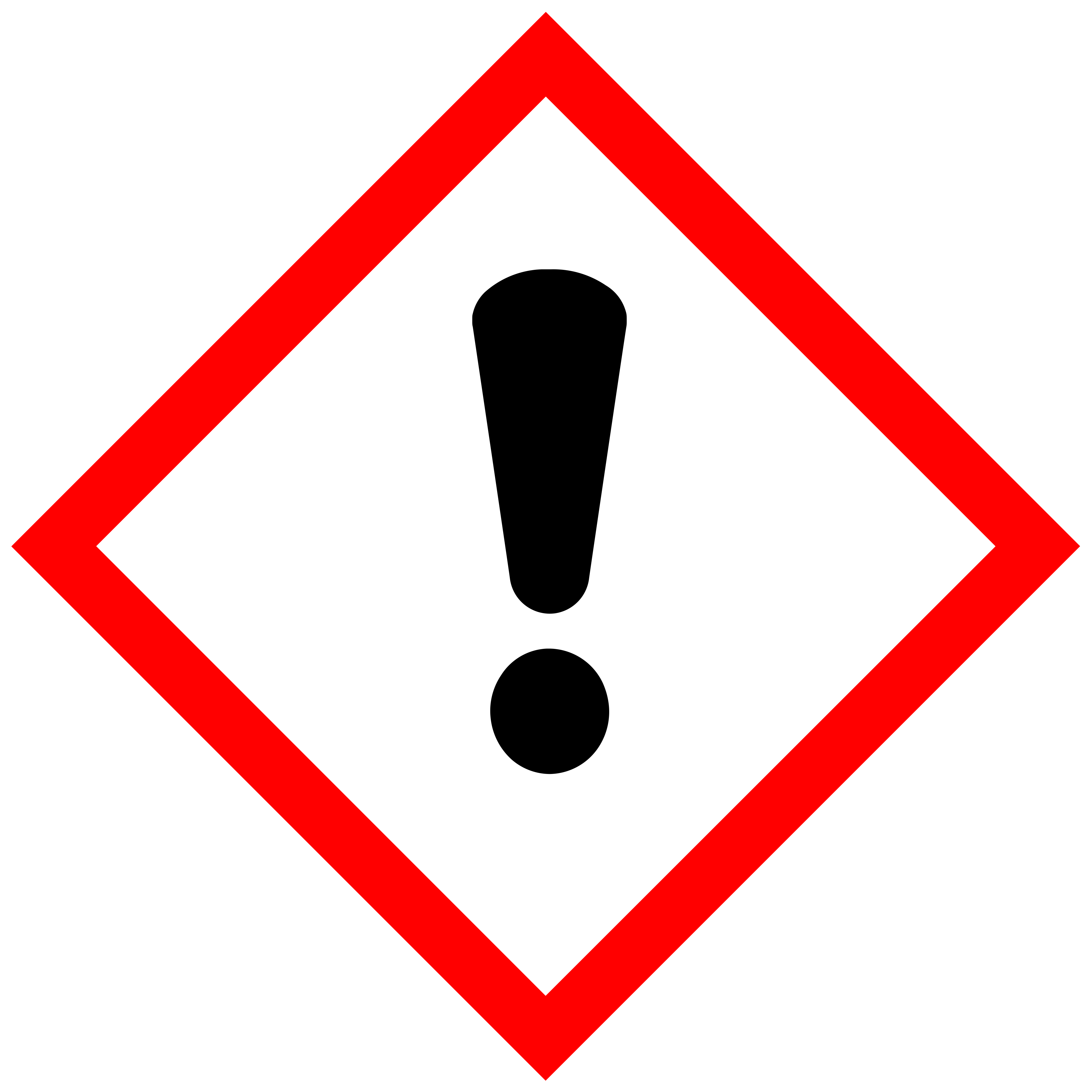
This is the official UN GHS artwork — public domain, free to reuse in training decks, wall posters, workplace signs, and labels.
Download SVG (vector)Download PNG (2048 px)
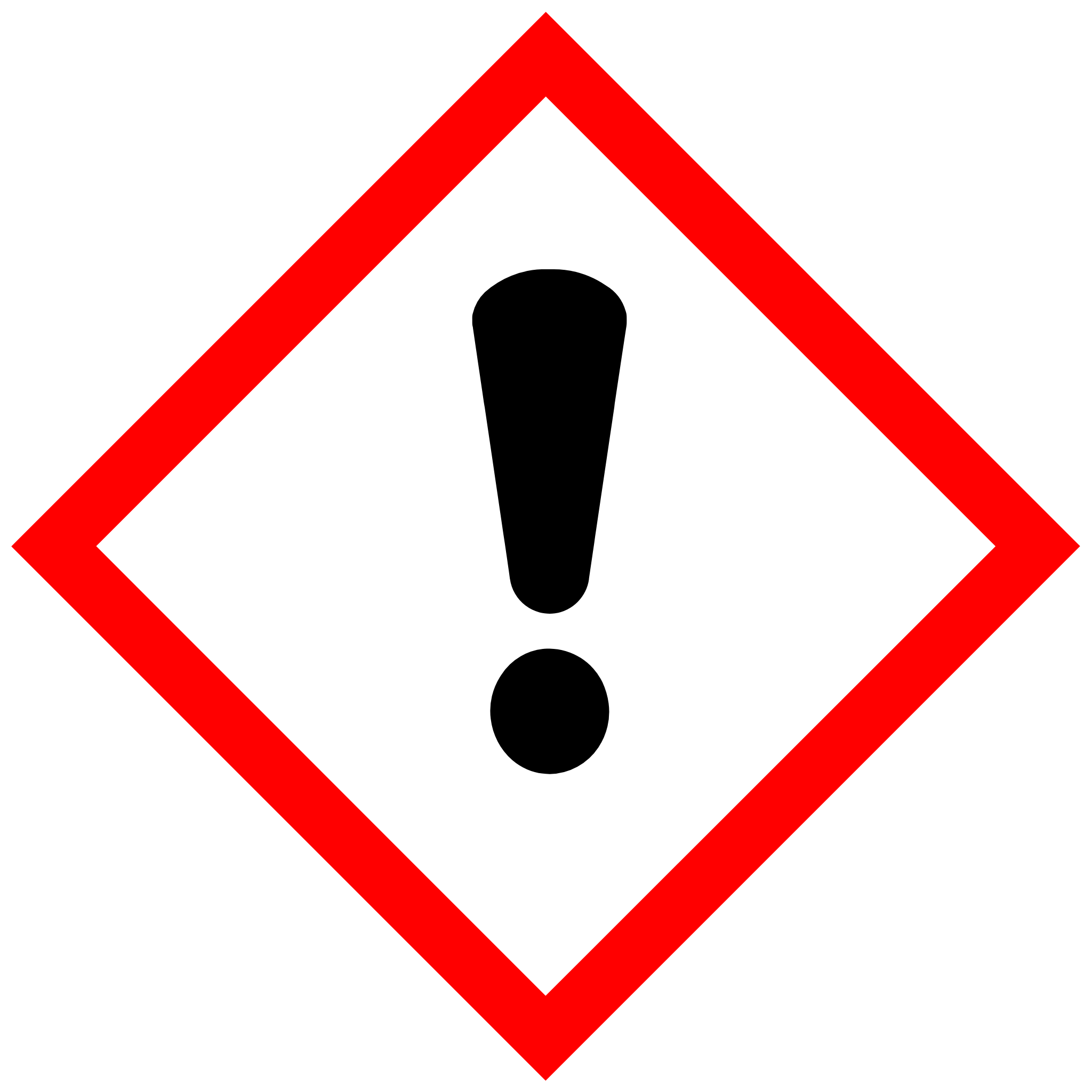
On a printed label the symbol must sit in the red diamond frame, point-up, as shown — the frame is part of the pictogram.
- Acute toxicity, category 4
- Skin irritation (category 2)
- Eye irritation (category 2A)
- Skin sensitization
- Specific target organ toxicity, single exposure, category 3
Precedence rules. The exclamation mark is the polite one — it steps aside when a stronger symbol covers the same ground:
- If the skull and crossbones (GHS06) appears, the exclamation mark does not.
- If corrosion (GHS05) appears, the exclamation mark is dropped where it stands for skin or eye irritation.
- If the health hazard symbol (GHS08) appears for respiratory sensitization, the exclamation mark is dropped where it stands for skin sensitization or irritation.
Hazard statements with this pictogram
Reference information, not legal or professional advice. Statement texts and allocations follow GHS Rev 9 / 29 CFR 1910.1200 Appendix C as implemented by our classification engine; the regulatory text and agency practice control. Claims last reviewed July 23, 2026.
The engine writes these for you.
When SDS HQ authors an SDS or a container label, it assigns the hazard statements, signal word, pictograms, and precautionary statements from these same tables — automatically, with the calculation shown.