The 9 GHS pictograms
The red-diamond symbols that make a chemical label readable at arm's length. Each card links to the symbol's page — what it means, which hazard classes put it on the label, and the official artwork as a free download, public domain, in SVG and print-quality PNG.
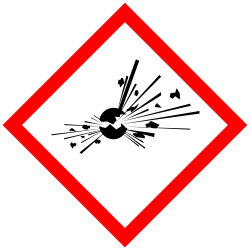
The substance or mixture can detonate, deflagrate, or explode — releasing destructive energy far faster than ordinary burning.
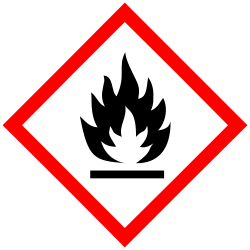
The product catches fire readily — from an ignition source, from heat, or in some classes spontaneously in air. On liquids, the category is set by flash point and boiling point.
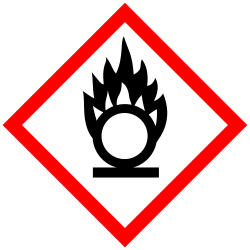
An oxidizer: it releases oxygen that makes other materials ignite more easily and burn more fiercely. Keep it away from combustibles.

Gas stored under pressure. The container can explode if heated, and refrigerated liquefied gases can cause cryogenic burns.
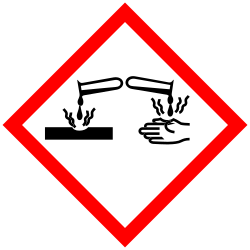
Destroys what it touches: skin burns, serious eye damage, or corrosion of metals. The strongest of the skin/eye symbols — where it appears for corrosion, the exclamation mark is dropped for milder irritation.
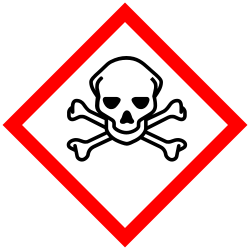
Acutely toxic: small exposures by swallowing, skin contact, or inhalation can be fatal or cause serious poisoning (acute toxicity categories 1–3). Where this symbol appears, the exclamation mark never does.

The catch-all for significant but lower-severity health hazards: harmful if swallowed/inhaled/on skin (acute category 4), skin and eye irritation, skin allergy, airway irritation, or drowsiness and dizziness.
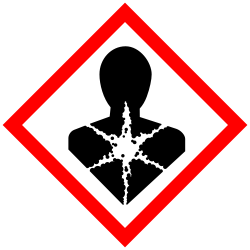
The serious chronic-health symbol: carcinogens, mutagens, reproductive toxicants, respiratory sensitizers, organ-damage hazards, and aspiration hazards.
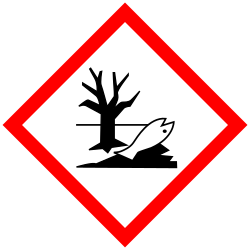
Hazardous to aquatic life — acutely toxic to fish, crustaceans, or algae, or harmful over the long term. In the US this class is not enforced by OSHA (it sits with EPA and DOT), but it appears on SDSs and labels.
On labels, a pictogram prints as a black symbol on white inside a red diamond frame. Which diamonds appear — and which are suppressed when a stronger one is present — is set by the classification; see each pictogram's page for its precedence rules.
Reference information, not legal or professional advice. Statement texts and allocations follow GHS Rev 9 / 29 CFR 1910.1200 Appendix C as implemented by our classification engine; the regulatory text and agency practice control. Claims last reviewed July 23, 2026.
The engine writes these for you.
When SDS HQ authors an SDS or a container label, it assigns the hazard statements, signal word, pictograms, and precautionary statements from these same tables — automatically, with the calculation shown.