H301 — Toxic if swallowed
The GHS hazard statement for acute toxicity, oral, category 3. Here is what it means, the label elements that travel with it, and the substances that carry it.
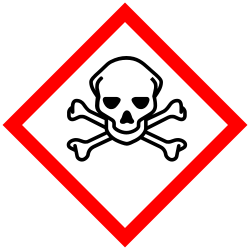
What it means
Serious harm — up to and including death — from swallowing a single dose or several doses within 24 hours. Categories 1 (most severe) onward are set from acute toxicity estimates (ATE) per GHS Chapter 3.1.
Precautionary statements paired with H301
When the engine writes SDS Section 2 or a container label for a product carrying H301, these are the P-codes it assigns, in the official Annex 3 groups:
Substances that carry H301
368 of the 4,228 substances in our database carry H301 when classified in pure form — recognizable examples:
Reference information, not legal or professional advice. Statement texts and allocations follow GHS Rev 9 / 29 CFR 1910.1200 Appendix C as implemented by our classification engine; the regulatory text and agency practice control. Claims last reviewed July 23, 2026.
The engine writes these for you.
When SDS HQ authors an SDS or a container label, it assigns the hazard statements, signal word, pictograms, and precautionary statements from these same tables — automatically, with the calculation shown.